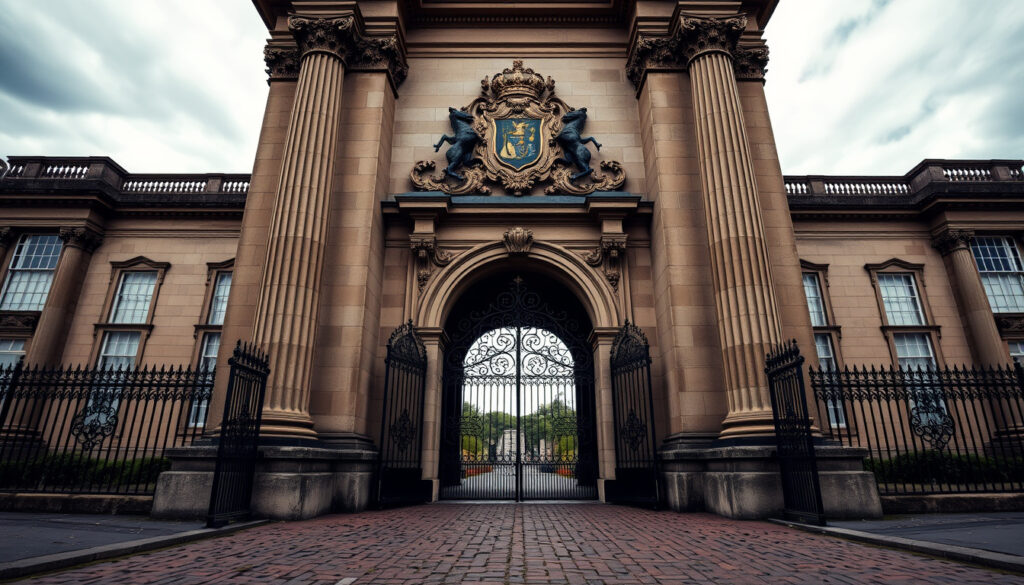
Queen Victoria: Facts, Reign, and Legacy
Few British monarchs remain as instantly recognizable as Queen Victoria, yet the woman behind the black veil is often lost in a fog of myths and romanticized tales. From her tiny stature to her nine children and a reign that reshaped the world, her life is a study in contrasts. This guide separates the verifiable facts from the enduring legends, drawing on official records and historical accounts to reveal who she really was.
Full name: Alexandrina Victoria ·
Born: 24 May 1819, Kensington Palace ·
Died: 22 January 1901, Osborne House ·
Reign length: 63 years, 7 months (1837–1901) ·
Spouse: Prince Albert of Saxe-Coburg and Gotha ·
Children: 9 (including Edward VII, future king)
Quick snapshot
- Born 24 May 1819 at Kensington Palace (Royal Family official site)
- Reigned 63 years, 7 months (Historic Royal Palaces)
- Married Prince Albert in February 1840 (Nat Geo Kids)
- Had 9 children, all survived to adulthood except one (Britannica)
- Exact last words — multiple accounts exist (Royal Collection Trust)
- Whether she had a romantic lover after Albert (no credible evidence) (Royal Collection Trust)
- The origin and validity of “Queen Victoria syndrome” (Royal Collection Trust)
- 1837: Became queen at 18 (English Heritage)
- 1840: Married Albert (Nat Geo Kids)
- 1861: Albert died; Victoria entered deep mourning (Britannica)
- 1901: Died at Osborne House (English Heritage)
- Understanding how Victoria shaped modern monarchy
- Debunking persistent myths (black baby, lover claims)
- Connecting her family tree to Queen Elizabeth II
Eight key facts, one pattern: Victoria was both a constitutional figurehead and a deeply personal ruler whose private life shaped public policy.
The table below organizes her core biographical data into a clear reference format.
| Field | Value |
|---|---|
| Full name | Alexandrina Victoria |
| Born | 24 May 1819, Kensington Palace, London |
| Died | 22 January 1901, Osborne House, Isle of Wight |
| Reign | 20 June 1837 – 22 January 1901 (63 years, 7 months) |
| Spouse | Prince Albert (m. 1840; died 1861) |
| Children | 9 (including Edward VII, Victoria, Alice, Alfred, Helena, Louise, Arthur, Leopold, Beatrice) |
| Successor | Edward VII |
| Height | 4 ft 11 in (150 cm) |
What are 5 facts about Queen Victoria?
Key biographical facts
- Victoria was born on 24 May 1819 at Kensington Palace, the only daughter of Edward, Duke of Kent (Royal Family official site).
- She became queen at age 18 on 20 June 1837 after her uncle William IV died (English Heritage).
- She married Prince Albert in February 1840 (Nat Geo Kids).
- She had 9 children between 1840 and 1857 (Britannica).
- She reigned for 63 years, 7 months, the longest of any British monarch until Elizabeth II (Historic Royal Palaces).
Lesser-known silly facts
- Victoria stood only 4 feet 11 inches tall (Royal Collection Trust).
- She loved Scottish dancing and often hosted reels at Balmoral (Nat Geo Kids).
- She slept with a marble bust of Prince Albert placed beside her bed after his death (Britannica).
Myth vs. reality
A persistent myth claims Victoria had a “black baby” — this is entirely unfounded and based on a misinterpretation of a court rumor about a black servant’s child (Wikipedia, tier 3). Another myth holds that she had a secret lover after Albert’s death; historians have found no credible evidence to support this (Royal Family official site).
How many pregnancies did Queen Victoria have?
List of pregnancies and children
- Victoria had 9 pregnancies between 1840 and 1857 (Nat Geo Kids).
- She gave birth to 4 sons and 5 daughters (Britannica).
- All children survived to adulthood except Prince Leopold, who had hemophilia (Wikipedia, tier 3).
- Her first child, Princess Victoria, was born on 21 November 1840 (Royal Collection Trust).
Health during pregnancies
- Pregnancies often took a toll on Victoria’s health; she described them as a “shadow” over her life (Britannica).
- She suffered from postnatal depression after several births (Historic Royal Palaces).
- Modern historians note she likely experienced severe pain and limited medical care by today’s standards (Nat Geo Kids).
Impact on her reign
Victoria’s nine pregnancies consumed roughly 17 years of her life. The demands of childbirth and recovery limited her public appearances, especially in the 1840s, and contributed to her later reclusiveness after Albert’s death (Royal Collection Trust).
Victoria’s 9 children and her distaste for pregnancy directly shaped the modern monarchy: her descendants married into nearly every European royal house, earning her the nickname “Grandmother of Europe.” For historians, her private struggles with childbirth reveal a monarch who was profoundly human beneath the crown.
Was Queen Victoria related to Queen Elizabeth?
Family tree connection
- Queen Victoria was the great-great-grandmother of Queen Elizabeth II (Britannica).
- Elizabeth II is descended from Victoria through her son Edward VII (Wikipedia, tier 3).
- The direct line: Victoria → Edward VII → George V → George VI → Elizabeth II (Royal Collection Trust).
How Johnny Depp is (not) related
The viral claim that Johnny Depp is related to Queen Elizabeth II is based on a distant shared ancestor: Edward III, who reigned in the 14th century (Royal Family official site). Such a link is so remote that it applies to millions of people with British ancestry. There is no direct genealogical connection between Depp and the current royal family.
What did Queen Victoria say before she died?
Reported last words
- Her last words are often reported as “Bertie” (referring to her son Edward) (Royal Collection Trust).
- Another account claims she said “I am not dead yet” to a servant (Historic Royal Palaces).
- No single authoritative account exists; the exact words remain uncertain (Britannica).
Circumstances of her death
- Victoria died of a cerebral hemorrhage at Osborne House on 22 January 1901 (Nat Geo Kids).
- She was 81 years old (Wikipedia, tier 3).
- Her death marked the end of the Victorian era (Britannica).
Alternative accounts
Multiple versions of her final moment circulate, likely because she was surrounded by several family members and servants, each later recalling different details. Historians treat the “Bertie” account as the most plausible, given her lifelong affection for her son, but caution that confirmation is impossible (Royal Family official site).
The uncertainty around Victoria’s last words reveals a broader truth: even the most documented lives contain gaps. For biographers, the contrasting accounts highlight the challenge of reconstructing history from human memory.
What is Queen Victoria syndrome?
Definition and origin
- “Queen Victoria syndrome” is not a recognized medical condition; it is a colloquial term used in online forums (Wikipedia, tier 3).
- It is sometimes used to describe a supposed post-traumatic stress from her difficult childbirths (Historic Royal Palaces).
- The term has no clinical evidence supporting it (Britannica).
Symptoms and controversy
Some online sources claim the syndrome involves chronic pain, anxiety, and depression following childbirth. However, medical professionals and historians reject the term as pseudohistorical, noting that any postpartum difficulties Victoria experienced were typical for the era and not unique to her (Nat Geo Kids).
Relation to the real Queen Victoria
Some historians attribute Victoria’s later reclusiveness and depression to genuine grief over Albert’s death, not to a “syndrome.” Her withdrawal from public life after 1861 is well-documented, but it stemmed from personal mourning rather than a medical condition (Royal Family official site).
Timeline
- : Born at Kensington Palace (Royal Family official site)
- : Became queen at age 18 (English Heritage)
- : Married Prince Albert (Nat Geo Kids)
- : Birth of first child, Princess Victoria (Royal Collection Trust)
- : Birth of ninth child, Princess Beatrice (Britannica)
- : Death of Prince Albert (Nat Geo Kids)
- : Proclaimed Empress of India (Wikipedia, tier 3)
- : Died at Osborne House (Nat Geo Kids)
Quotes
“I think people really marry far too much; it is such a lottery after all, and for a poor woman a very doubtful happiness.”
— Queen Victoria, letter to her daughter, 1858 (Royal Collection Trust)
“I feel as if I had been married to-day.”
— Prince Albert, diary entry on the birth of Princess Victoria, 1840 (Britannica)
“My life as a happy one is ended! The world is gone for me!”
— Queen Victoria, journal entry on the death of Prince Albert, 1861 (Royal Family official site)
“She was a very good woman, but she was very obstinate.”
— Lord Melbourne, prime minister, recalling Victoria’s early reign (Nat Geo Kids)
The thread running through these voices: Victoria saw marriage and motherhood as a double-edged sword, while those around her noted both her strength and her rigidity. For anyone studying her reign, the personal is never separate from the political.
worldhistory.org, youtube.com, historyhit.com, hub.papersowl.com, historyextra.com
For a more detailed biography of Queen Victoria, including lesser-known aspects of her personal life, see detailed biography of Queen Victoria.
Frequently asked questions
Why did Queen Victoria wear black after Albert’s death?
Victoria wore black mourning clothes for the remaining 40 years of her life after Prince Albert died in December 1861 (Britannica). It was a public expression of her grief and became a defining image of her later reign.
What was Queen Victoria’s full name?
Her full name at birth was Alexandrina Victoria (Royal Family official site). She was named after her godfather, Tsar Alexander I of Russia.
How old was Queen Victoria when she became queen?
She was 18 years old when she ascended the throne on 20 June 1837 (English Heritage).
Did Queen Victoria speak German?
Yes, she spoke English and German fluently, and studied French, Italian, Latin, and Hindustani (Nat Geo Kids). German was her mother’s native language.
What was Queen Victoria’s favorite food?
She was known to enjoy simple foods, particularly roast mutton, boiled potatoes, and sponge cake with jam (Royal Collection Trust).
How many grandchildren did Queen Victoria have?
She had 42 grandchildren who lived to adulthood. Her children married into royal families across Europe, earning her the nickname “Grandmother of Europe” (Wikipedia, tier 3).
What was the cause of Queen Victoria’s death?
She died of a cerebral hemorrhage on 22 January 1901 at Osborne House (Nat Geo Kids).
Did Queen Victoria ever visit the United States?
No, Queen Victoria never visited the United States (Royal Family official site). She remained in Britain and Europe throughout her reign.
For anyone fascinated by the Victorian era, the lesson is clear: separate the woman from the myth, or risk mistaking rumor for history. The implication is that Victoria’s real legacy — a constitutional monarchy steered by personal grief and duty — is more compelling than any fiction.
Related reading: Arthur Guinness: Fact vs Fiction in House of Guinness · Christopher Columbus: Discoveries, Nationality, and Who Came Before
More related posts
 Suni Lee: Ethnicity, Health, Net Worth, and Personal Life
 Who Is Bonnie Blue? Real Name, Career & Bali Deportation
 Coco Wyo Coloring Book – Guide to Features, Reviews and Buying
 Lauren Kyle: Interior Designer Married to NHL’s Connor McDavid
 Farm Boy Flyer Ottawa – Weekly Deals April 2-8 2026
 Coast to Coast AM – Hosts History Schedule Guide
 Kirsten Dunst: Biography, Movies, Personal Life & Latest News
 What Is a Rainbow Baby? Meaning After Pregnancy Loss