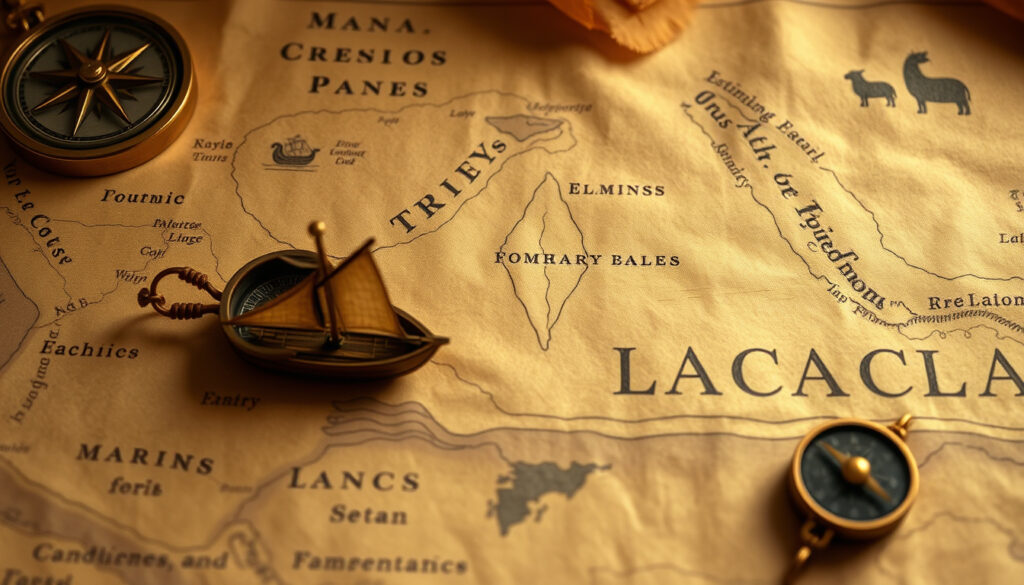
Christopher Columbus: Discoveries, Nationality, and Who Came Before
Few school lessons stick like the image of Columbus sailing the ocean blue in 1492, but the more you look at the standard story, the more you realize there’s a much older, more tangled history beneath it. This article separates what’s archaeologically confirmed from what’s still hotly debated, compares the major pre-Columbian expeditions, and shows why the question “who discovered America” isn’t as simple as a date on a timeline.
Born: 1451, Genoa, Republic of Genoa ·
Famous for: 1492 transatlantic voyage under Spanish crown ·
Pre-Columbian arrivals confirmed: Norse (c. 1000 CE) ·
Number of voyages: 4 ·
Year of death: 1506
Quick snapshot
- 1492 landing in the Bahamas (Britannica encyclopedia)
- Four expeditions under Spanish crown (Britannica reference)
- Initiated European colonization (Britannica encyclopedia)
- Leif Erikson circa 1000 CE (World History Encyclopedia)
- Settlement at L’Anse aux Meadows (World History Encyclopedia)
- Temporary, no lasting colonization (World History Encyclopedia)
- St. Brendan legend (6th century) (Catholic Encyclopedia)
- No archaeological confirmation (Catholic Encyclopedia)
- Debated among historians (Catholic Encyclopedia)
- Whether Irish monks reached America before the Vikings
- Exact location of Columbus’s first landing in the Americas
Six key facts about Columbus, at a glance.
| Label | Value |
|---|---|
| Full name | Cristoforo Colombo |
| Born | 1451, Genoa, Republic of Genoa |
| Died | 1506, Valladolid, Spain |
| Nationality | Italian (Republic of Genoa) |
| Primary patron | Crown of Castile (Spain) |
| Major accomplishment | Transatlantic voyage of 1492 |
Who actually first discovered America?
The standard answer has shifted over the past half-century. What was once taught as a clean 1492 story now comes with a qualification: the Norse got there first — but the full picture is even more complicated.
Evidence of Norse settlement at L’Anse aux Meadows
- In the late 10th century, Norse explorers led by Leif Erikson reached North America, establishing a settlement at L’Anse aux Meadows in Newfoundland, Canada (BYU Religious Studies Center).
- This site is archaeologically proven: remains of turf-walled buildings, iron-working, and Norse-style artifacts have been carbon-dated to roughly 1000 CE.
- The Norse called the region Vinland, based on sagas describing wild grapes and timber.
- This settlement was temporary, and the Norse did not establish a lasting colonial presence.
Possible pre-Columbian contact by Irish monks
- According to the legend of St. Brendan, an Irish monk may have crossed the Atlantic in a leather curragh sometime in the 6th century.
- Some medieval Irish texts refer to a “Promised Land of the Saints” far west of Ireland, but no archaeological evidence has been found to confirm an Irish landing in the Americas (Catholic Encyclopedia reference).
The implication: the story of “discovery” depends on whether you measure by first arrival or by lasting impact.
Was Columbus Italian or Spanish?
This question surfaces constantly because Columbus’s origins affect how different countries claim him. The historical record is surprisingly settled on this one.
Columbus’s Genoese origins
- Columbus was born in 1451 in Genoa, a maritime republic on the northwestern coast of Italy.
- Contemporary records, including his own writings, refer to him as “Cristoforo Colombo” of Genoa.
Service under the Spanish crown
- After being turned down by Portugal’s king, Columbus secured backing from Isabella I of Castile and Ferdinand II of Aragon.
- He became Admiral of the Ocean Sea and governor of the lands he claimed under Spanish authority.
For Italian American communities, Columbus is a proud Italian icon. For Spain, he is the captain who launched its American empire. The historical papers back the Genoese origin, but the loyalty was always to Castile.
The pattern: Columbus’s identity remains split between birthplace and patronage, reflecting competing national claims to his legacy.
What was Christopher Columbus famous for?
His fame rests on one specific voyage — but what that voyage actually accomplished is often oversimplified in school textbooks.
The 1492 voyage and landing in the Bahamas
- Columbus departed from Palos, Spain, on August 3, 1492, with the ships Niña, Pinta, and Santa María.
- After a stop in the Canary Islands, the fleet crossed the Atlantic and made landfall on October 12, 1492, in the Bahamas, an island Columbus named San Salvador.
- He did not reach the continental United States on this first voyage.
Role as governor of Hispaniola
- On his second voyage (1493–1496), Columbus established the first European colony in the Americas on Hispaniola (modern-day Haiti and Dominican Republic).
- His governance was controversial, leading to his arrest and return to Spain in chains in 1500.
The 1492 landing is famous not because Columbus was the first European in the Americas, but because his voyage triggered an irreversible chain of colonization. That’s the real distinction between a “discovery” and a permanently impactful arrival.
What this means: Columbus’s fame rests on consequence rather than chronological priority.
Who came first, Vikings or Columbus?
This is the comparison that schools now teach, but the gap in time is wider than most people expect.
Timeline of Norse voyages (circa 1000 CE)
- Leif Erikson’s voyage to Vinland is commonly dated to about 1000 CE.
- The Norse presence in Greenland began around 985 CE and lasted about 500 years (Wikipedia article).
Columbus’s later expeditions (1492–1504)
- Columbus’s first voyage: 1492–1493; second: 1493–1496; third: 1498–1500; fourth: 1502–1504.
- The gap: nearly 500 years between Leif Erikson’s voyage and Columbus’s first landing.
Two expeditionary approaches, one key difference.
| Aspect | Norse (c. 1000 CE) | Columbus (1492–1504) |
|---|---|---|
| Known leader | Leif Erikson | Christopher Columbus |
| Confirmed site | L’Anse aux Meadows, Newfoundland | Caribbean islands (Bahamas, Hispaniola) |
| Evidence | Archaeological + sagas | Contemporary European records + ship logs |
| Colonization outcome | Temporary, abandoned | Sustained European-Antillean contact, colonization |
| Historical framing | Exploration, not conquest | Opening of Americas to European empire |
The catch: priority in discovery does not automatically confer historical significance — impact depends on what follows.
What were Christopher Columbus’s last words?
The famous deathbed quote might not be verbatim, but the recorded accounts paint a consistent picture of his final days.
Accounts of Columbus’s final days
- Columbus died on May 20, 1506, in Valladolid, Spain, at age 54 or 55.
- He had been ill for months, likely from reactive arthritis (Reiter’s syndrome), and had requested last rites.
Recorded deathbed statements
- His reported last words, as recorded by his son Ferdinand and biographer Bartolomé de Las Casas, include: “Into your hands, O Lord, I commend my spirit” — a version of the Catholic committal prayer.
- Other accounts say he spoke of his voyages and his belief that he had reached Asia until the end.
There is no single transcription that historians universally accept as authentic. The “Into your hands” quote appears in multiple secondhand accounts but not in Columbus’s own journal from his final days. It may be a pious embellishment by later biographers.
The implication: even the final moments of a world-changing figure are filtered through the perspectives of those who recorded them.
Confirmed facts
- Columbus’s Genoese birth and his four transatlantic voyages under Spanish patronage (Britannica encyclopedia).
- Norse settlement at L’Anse aux Meadows is archaeologically confirmed (Britannica reference).
What’s unclear
- Whether Irish monks, such as St. Brendan, reached America before the Vikings.
- Exact location of Columbus’s first landing in the Americas.
Timeline signal
- c. 1000 CE: Norse expedition led by Leif Erikson reaches North America (L’Anse aux Meadows). (Britannica reference)
- 1451: Christopher Columbus born in Genoa. (Britannica encyclopedia)
- 1492–1493: First voyage: Columbus crosses the Atlantic, lands in the Bahamas. (World History Encyclopedia)
- 1493–1496: Second voyage: colonization of Hispaniola begins. (BYU Religious Studies Center)
- 1498–1500: Third voyage: reaches mainland of South America. (Catholic Encyclopedia reference)
- 1502–1504: Fourth voyage: explores Central America. (Wikipedia article)
- 20 May 1506: Columbus dies in Valladolid, Spain. (Catholic Encyclopedia)
“I saw some naked people… they should be good servants.”
Christopher Columbus, from his journal entry on October 12, 1492, upon sighting land in the Bahamas (BYU Religious Studies Center)
“They found there fields of wild wheat, and vines from which the best wine could be made.”
Leif Erikson, as recorded in the Saga of the Greenlanders, describing Vinland (World History Encyclopedia)
For Canadians and Americans raised on the Columbus narrative, the choice is between a tidy story and a messy truth. The archaeological evidence from L’Anse aux Meadows is real. Columbus’s voyages are real. The two stories don’t cancel each other out; they just require a more honest framing: Europeans reached America multiple times, but only one of those arrivals launched the world we live in today. For teachers and tour guides passing on history to the next generation, the honest answer to “who discovered America” isn’t a single name — it’s a layered story of Norse explorers, Indigenous peoples who were already here, and a Genoese captain sailing under a Spanish flag.
reddit.com, youtube.com, en.wikipedia.org, en.wikipedia.org, youtube.com, the-map-as-history.com
While Columbus is often credited with discovering the New World, Norse explorers who came before had already established settlements in North America around the year 1000.
Frequently asked questions
Did Christopher Columbus visit Ireland?
There is no historical evidence that Columbus ever visited Ireland. He sailed from Spain to the Canary Islands on his first voyage, and his later expeditions went to the Caribbean and Central America.
What did Christopher Columbus discover?
Columbus is credited with opening the Americas to European exploration and colonization via his 1492 transatlantic voyage. He reached the Bahamas, Hispaniola, and later explored the coast of South and Central America.
What was Christopher Columbus’s religion?
Columbus was a devout Roman Catholic. His writings frequently reference God and divine providence, and he saw his voyages as part of a mission to spread Christianity (oftening citing Catholic doctrine).
Was Christopher Columbus married?
Columbus married Filipa Moniz Perestrelo, a Portuguese noblewoman, in the 1470s. She died before his first voyage. He later had a long-term relationship with Beatriz Enríquez de Arana, with whom he had a son, Ferdinand.
How many ships did Columbus have on his first voyage?
Columbus commanded three ships: the Niña, the Pinta, and the Santa María. The Santa María ran aground and was abandoned near Hispaniola during the first voyage.
More related posts
 Amy Madigan: Oscar Winner, Marriage, and Kazan Controversy
 Barrett Funeral Home Obituaries: Recent Death Notices NL
 Louis Osbourne: Career, Family, and Ozzy’s Funeral
 Dolph Lundgren: IQ, Health, Age Gap, and Biography (2024)
 Matt Damon: Wife Age, Children, Friendships & Career
 Xbox Cloud Gaming Fortnite: How to Play Free on Mobile, Mac & More
 Jason Bateman: Sobriety, Wife & Controversy
 La Cache à Maxime – Complete Guide to Luxury Stays in Scott