What Is a Cold Sore? Causes, Treatments, and Prevention
If you’ve ever woken up with a tingling spot on your lip and thought “oh no, not again,” you’re far from alone. Cold sores are one of the most common viral infections worldwide, yet they carry a surprising amount of confusion and stigma.
Caused by: Herpes simplex virus type 1 (HSV-1) ·
Global prevalence (under 50): Approximately 67% (WHO) ·
Typical healing time: 7 to 10 days without treatment ·
Contagious duration: Until scab fully forms (usually 2-3 weeks) ·
Recurrence triggers: Stress, illness, sun exposure, fatigue
Quick snapshot
- Cold sores are caused by HSV-1 (or rarely HSV-2) (Mayo Clinic (nonprofit medical center)).
- The virus remains in the body for life (Cochrane Review (systematic review database)).
- Antiviral medications reduce severity and duration (Mayo Clinic).
- Exact mechanism of viral reactivation is not fully understood (Cochrane Review).
- Lysine as a preventative treatment has mixed evidence (Harvard Health (Harvard Medical School)).
- Individual trigger variability is high (Mayo Clinic).
- First signs: tingling, burning, or itching 6–24 hours before blister appears (Mayo Clinic).
- Blisters last 2–3 days, then burst and form a scab (MedlinePlus (U.S. National Library of Medicine)).
- Complete healing typically takes 7–10 days without treatment (Healthdirect Australia (government health service)).
- Avoid kissing and sharing utensils while blisters are present (Healthdirect Australia).
- Antiviral treatment works best when started at the first tingle (Harvard Health).
- Manage triggers like stress and sun exposure to reduce recurrence (Mayo Clinic).
Five key facts, one pattern: cold sores are lifelong, manageable, and widely misunderstood — but a few numbers tell the story clearly.
| Fact | Value |
|---|---|
| Virus type | Herpes simplex virus type 1 (HSV-1) |
| Transmission | Direct contact with blisters or saliva (even asymptomatic) (Healthdirect Australia) |
| Incubation period | 2–12 days after initial exposure (Mayo Clinic) |
| Recurrence rate | Varies; some experience 1–2 outbreaks per year, others more (MedlinePlus) |
| Complications | Rare: herpes encephalitis, spread to eyes (herpetic keratitis) (Cochrane Review) |
What is a cold sore?
What are the first signs of a cold sore?
- A tingling, burning, or itching sensation on the lip or surrounding skin — often the first clue (Mayo Clinic (nonprofit medical center)).
- Within 24 hours, small fluid-filled blisters appear, usually on or around the lips (MedlinePlus (U.S. National Library of Medicine)).
How long does a cold sore last?
- Untreated, cold sores heal on their own in 7 to 10 days (Healthdirect Australia (government health service)).
- Antiviral treatment can shorten the outbreak by 1 to 2 days if started early (Harvard Health (Harvard Medical School)).
The implication: catching the prodrome — that tingle — is your only window to act early. Miss it, and you’re locked into the full week-long cycle.
What causes a cold sore?
What is the main cause of cold sores?
- Infection with herpes simplex virus type 1 (HSV-1) is the primary cause (MedlinePlus).
- Most people acquire the virus during childhood through close contact with an infected person’s saliva (Mayo Clinic).
- Once inside the body, the virus travels to nerve clusters (ganglia) and remains dormant for life (Cochrane Review (systematic review database)).
Can cold sores be caused by stress?
- Stress is a well-documented trigger for reactivation (Mayo Clinic).
- Other triggers include fever, fatigue, sun exposure, and hormonal changes (Healthdirect Australia).
Cold sores are caused by a virus that nearly everyone carries, yet outbreaks are treated as if they signal poor hygiene. The real driver is your immune system’s response to triggers — not a failure of cleanliness.
The pattern: HSV-1 is a master of stealth. It hides in nerve cells and only erupts when your body is under pressure. Managing triggers is your best defense.
Are cold sores an STD?
Is it a cold sore or STD?
- Most cold sores are caused by HSV-1, which is typically transmitted through non-sexual contact (kissing, sharing utensils) during childhood (Mayo Clinic).
- However, HSV-1 can cause genital herpes through oral sex, so in that context it qualifies as a sexually transmitted infection (STI) (CDC (U.S. public health agency)).
Are cold sores a STD or STI?
- The majority of cold sores are not sexually transmitted; they are a common childhood infection (World Health Organization (global health authority)).
- Stigma arises because the same virus (HSV-1) can infect the genitals, but the transmission route is different (Healthdirect Australia).
Labeling every cold sore as an “STD” creates unnecessary shame for people who were infected as children. The real public health message: HSV-1 is common, treatable, and rarely dangerous — but it can be passed to the genitals during oral sex, so awareness matters.
The catch: the same herpes virus behaves differently depending on where it lands. Oral HSV-1 is normal; genital HSV-1 is still HSV-1, but transmission prevention changes.
How do you get rid of cold sores fast?
What kills cold sores fast?
- Prescription antiviral medications — acyclovir, valacyclovir, famciclovir — can shorten an outbreak by 1 to 2 days when taken at the first sign (Mayo Clinic).
- One-day high-dose oral treatment (famciclovir or valacyclovir) is particularly effective (Harvard Health).
What clears up cold sores quickly?
- Over-the-counter cream containing docosanol (Abreva) may reduce healing time by half a day to a day (Mayo Clinic).
- Cold compresses and pain relievers (ibuprofen, acetaminophen) can ease symptoms but don’t kill the virus (Healthdirect Australia).
How to get rid of a cold sore in 24 hours
- It is not realistic to eliminate a cold sore in 24 hours; antivirals can stop it from forming if taken during the prodrome (tingle) stage (Harvard Health).
- No treatment removes the virus from the body; they only reduce symptoms and duration (Cochrane Review).
The trade-off: starting antiviral meds at the first tingle can stop the outbreak in its tracks, but most people either don’t have a prescription or don’t recognize the warning signs early enough.
What can trigger a cold sore?
Does a cold sore mean you are sick?
- Cold sores often appear when your immune system is busy fighting another illness — fever, cold, or flu (Mayo Clinic).
- They do not mean you are “sick” with a new infection; they mean the dormant virus has reactivated (MedlinePlus).
What triggers a cold sore outbreak?
- Common triggers: stress, fatigue, sun exposure, wind, hormonal changes (e.g., menstruation), and physical trauma to the lip (Healthdirect Australia).
- Individual reactivity varies — some people get outbreaks only from sun, others only from stress (Mayo Clinic).
If you track your outbreaks, you’ll likely spot a pattern — sun exposure after a stressful week, for example. Knowing your personal triggers is more useful than trying every “prevention” tip online.
The pattern: triggers are external stressors that temporarily suppress immune surveillance of the dormant virus. Managing them reduces frequency, but not everyone can avoid sunlight or deadlines.
How to manage a cold sore step by step
- Recognize the prodrome. The tingling or burning sensation is your cue to act within hours. Start antiviral treatment immediately if you have a prescription (Mayo Clinic).
- Apply cold compresses. Ice can reduce pain and swelling during the blister stage (Healthdirect Australia).
- Avoid touching the sore. The fluid inside blisters is highly contagious. Wash hands after any contact (CDC).
- Use OTC antiviral cream. Docosanol (Abreva) can shorten healing if applied multiple times daily (Mayo Clinic).
- Keep the sore clean and dry. Let it scab naturally — do not pick the scab. This minimizes scarring and contagion (MedlinePlus).
- Reduce future outbreaks. Identify and manage your triggers — use sunscreen on lips, practice stress reduction, get adequate sleep (Harvard Health).
For patients, the sequence is critical: the first 6 hours decide whether you get a mild tingle or a full blister. Don’t wait.
Confirmed facts
- Cold sores are caused by HSV-1 (or rarely HSV-2) (Mayo Clinic).
- The virus remains in the body for life (Cochrane Review).
- Antiviral medications reduce severity and duration (Mayo Clinic).
- Sun exposure is a common trigger (Healthdirect Australia).
What’s unclear
- Exact mechanism of viral reactivation not fully understood (Cochrane Review).
- Lysine’s effectiveness as a preventative has mixed evidence (Harvard Health).
- Why some people have frequent outbreaks and others have none is not well explained (Mayo Clinic).
Expert perspectives on cold sores
“Cold sores are small blisters caused by the herpes simplex virus (HSV). They are highly contagious and can spread even when the blisters are not visible.”
“There is no cure for cold sores, but treatment can help manage outbreaks. Prescription antiviral medicine or creams can help sores heal more quickly and may make future outbreaks less frequent, shorter, and less severe.”
Mayo Clinic (nonprofit medical center)
“An estimated 3.7 billion people under age 50 (67%) have HSV-1 infection globally. Most HSV-1 infections are acquired during childhood and are lifelong.”
“Herpes simplex virus (HSV) can cause infections in the mouth (cold sores) or genitals. HSV-1 is usually transmitted through oral contact and causes oral herpes.”
Centers for Disease Control and Prevention (U.S. public health agency)
For anyone who lives with recurring cold sores, the choice is clear: identify your personal triggers, keep a prescription antiviral on hand, and start treatment at the first tingle. Waiting costs you a full week of discomfort and raises the risk of spreading the virus to others. Act fast, or endure longer.
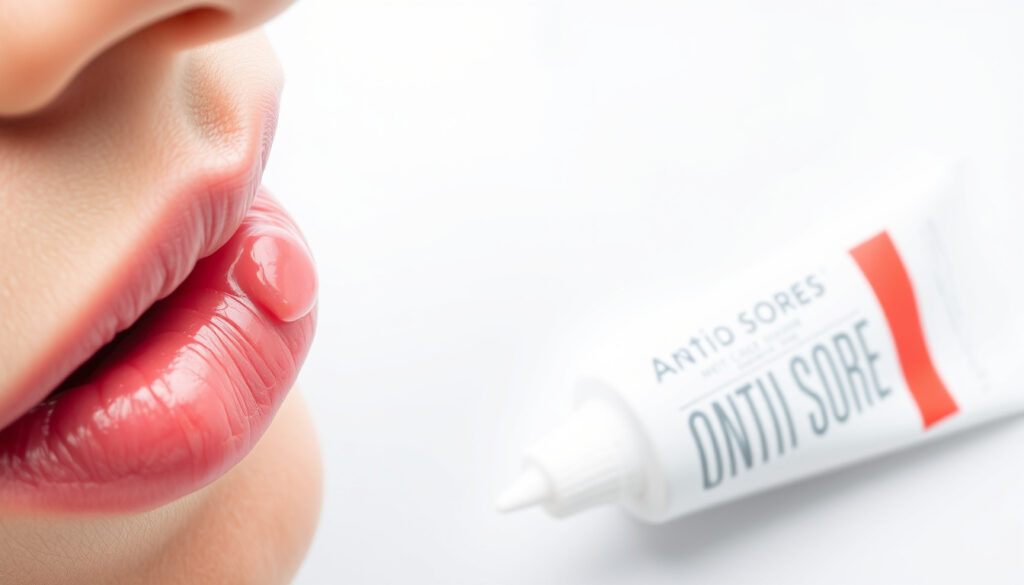
A cold sore is a small fluid-filled blister caused by the herpes simplex virus, typically appearing as a cold sore on the lips that can be triggered by stress or illness.
Frequently asked questions
Can you kiss someone with a cold sore?
No. Cold sores are highly contagious when blisters are present. Avoid kissing until the sore has completely healed and the scab has fallen off (Healthdirect Australia).
How long does a cold sore last?
Without treatment, 7–10 days. With early antiviral treatment, healing may occur in 5–7 days (Mayo Clinic).
Can cold sores spread to other parts of the body?
Yes. Touching a cold sore and then rubbing your eye can cause herpetic keratitis. The virus can also spread to genitals through oral sex (CDC).
Is there a cure for cold sores?
No. The herpes virus stays in your body for life. Treatments manage symptoms and speed healing but do not eliminate the virus (Cochrane Review).
What over-the-counter treatment works best?
Docosanol (Abreva) cream is the most studied OTC option; it can reduce healing time by about half a day to a day when applied at the first sign (Mayo Clinic).
Can you prevent cold sores with diet?
Lysine supplements are sometimes used, but evidence is mixed. A balanced diet supports immune function but does not guarantee prevention (Harvard Health).
Is it safe to exercise with a cold sore?
Moderate exercise is fine, but intense training that causes fatigue may trigger or worsen an outbreak. Listen to your body (Healthdirect Australia).
More related posts
 What Does Magnesium Do for Your Body? Key Benefits
 Garden Tower Defense Codes April 2026 (Active List)
 60 F to C: 15.56°C Formula, Chart & Comfort Guide
 Team Canada Hockey Schedule 2026: Full Olympic Guide
 Big Brother Season 27: Premiere, Cast, Winner & Streaming
 Farm Boy Flyer Ottawa – Weekly Deals April 2-8 2026
 What Is Machine Learning? Simple Definition, Types, and Examples
 Magog Houses for Sale: Complete Guide to Buying a Home