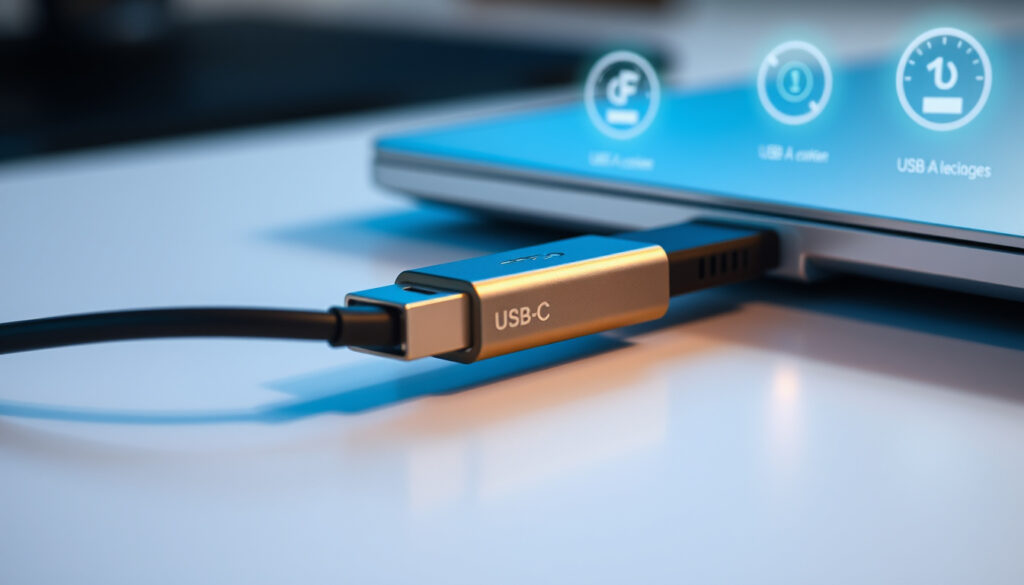
USB to USB-C Adapter – Compatibility, Speeds & Buying Guide
USB to USB-C Adapter: What It Is, Compatibility & Buying Guide
A USB to USB-C adapter serves as a bridge between older USB-A devices and newer USB-C ports found on modern laptops, smartphones, and tablets. These compact accessories enable users to continue using legacy cables and peripherals without replacing entire setups, making them essential tools during the ongoing transition in connector standards.
The shift from USB-A to USB-C has accelerated across the electronics industry, with manufacturers including Apple, Samsung, and Google eliminating legacy ports from newer devices. This transition has created widespread demand for reliable adapters that maintain backward compatibility while supporting contemporary features like fast charging and high-speed data transfer.
Understanding the technical specifications, compatibility requirements, and limitations of USB to USB-C adapters helps consumers make informed purchasing decisions. The market offers options ranging from simple passive adapters under $10 to multi-port hubs exceeding $100, each designed for specific use cases and device configurations.
Do I Need a USB to USB-C Adapter and When?
The primary purpose of a USB-A to USB-C adapter is straightforward: it allows legacy USB-A cables and accessories to connect with devices featuring USB-C ports. Modern MacBooks, including the MacBook Pro and MacBook Air, rely exclusively on USB-C for peripheral connectivity, creating immediate compatibility challenges for users with existing USB-A peripherals. Similarly, the iPhone 15 series and later models now use USB-C, replacing the Lightning connector that dominated Apple’s mobile lineup for over a decade.
Android smartphones from Samsung, Google, and other manufacturers have embraced USB-C as their standard connector, meaning users upgrading from older devices with micro-USB or USB-A ports need adapters to use their existing charging cables and accessories. The USB-C port’s reversible design eliminates the frustration of incorrect insertion, but this benefit only applies when connecting USB-C cables directly.
Common scenarios requiring a USB to USB-C adapter include connecting USB flash drives, external hard drives, keyboards, mice, printers, and card readers to modern laptops. Users with older vehicles featuring USB-A charging ports may also need adapters to connect newer smartphones for carPlay or Android Auto functionality.
Before purchasing an adapter, verify your device’s USB-C specifications. Some budget devices feature USB-C 2.0 ports that limit data speeds to 480Mbps, while premium devices support USB 3.1 or USB4 for faster transfers and higher power delivery.
Connects legacy USB-A cables and devices to modern USB-C ports
USB 2.0, USB 3.0, USB 3.1; male-to-female configurations
Up to 10Gbps data transfer, 100W Power Delivery charging
$5-$20 for basic adapters; $30-$100+ for multi-port hubs
Key Facts About USB-A to USB-C Adapters
- USB 2.0 adapters max out at 480Mbps, suitable only for basic charging and low-speed data transfer
- USB 3.0 and 3.1 adapters support up to 5Gbps data speeds and faster charging via Power Delivery
- Most adapters work plug-and-play with no driver installation required
- Premium adapters from Anker, UNITEK, and Kingston include power negotiation to prevent overcharging
- Basic adapters lack video output capabilities like HDMI or DisplayPort
- Multi-port hubs can add HDMI, SD card slots, and additional USB-A ports simultaneously
| Feature | USB-A to C Adapter | Native USB-C Cable |
|---|---|---|
| Charging Speed | Up to 100W with PD support | Up to 240W with USB PD 3.1 |
| Data Transfer | Up to 5Gbps (USB 3.0) | Up to 40Gbps (USB4/Thunderbolt) |
| Reversibility | Depends on USB-A cable orientation | Fully reversible connector |
| Video Output | Not supported on basic adapters | Supported on DP Alt Mode ports |
| Typical Cost | $5-$20 | $15-$50 |
| Portability | Extremely compact | Varies by cable length |
What Is a USB to USB-C Adapter and How Does It Differ from USB-A?
USB-A, the familiar rectangular connector that has dominated computing for over two decades, uses a design that requires correct orientation for insertion. USB-A ports appear on billions of devices worldwide, including desktop computers, laptops, chargers, game consoles, and automotive systems. The physical dimensions and pin configuration of USB-A remain consistent across versions, though internal specifications have evolved significantly.
USB-C represents a fundamental redesign of the USB connector. Its oval shape accommodates 24 pins in a symmetric arrangement, enabling reversible insertion regardless of orientation. Beyond the physical improvements, USB-C supports substantially higher data rates, power delivery up to 240 watts, and alternate modes like DisplayPort and Thunderbolt.
Understanding USB Standards and Specifications
USB 2.0, introduced in 2000, remains the most common baseline standard and appears in budget adapters. It supports data rates up to 480Mbps and basic charging up to 2.5W, making it suitable for keyboards, mice, and slow charging of older devices. Wikipedia’s comprehensive USB-C overview details how this standard has evolved to meet modern demands.
USB 3.0 and USB 3.1 significantly improve performance, offering theoretical data rates of 5Gbps and 10Gbps respectively. These standards enable fast file transfers, external SSD connectivity, and rapid device charging. The AnandTech analysis of USB 3.1 specifications explains the technical distinctions that affect real-world performance.
USB4, the newest standard, achieves data rates up to 40Gbps and integrates Thunderbolt 3 capabilities in compatible devices. However, USB4’s full capabilities require certified cables and devices, as detailed in USB-IF’s official Power Delivery documentation. Basic adapters cannot unlock USB4 performance—the feature requires complete USB4-certified hardware pathways.
A USB-A to USB-C adapter allows reusing existing USB-A cables, which makes economic sense when cables are high-quality or already positioned in fixed locations. However, a dedicated USB-C to USB-C cable provides better durability, longer reach, and access to the full USB-C feature set without adapter overhead.
Form Factors and Designs
Simple male-to-female adapters convert a single USB-C port into a USB-A receptacle. These compact devices slip onto keychains or fit in laptop sleeves, providing immediate backward compatibility. The JXMOX USB-C to USB 3.0 Adapter, available in two-packs for approximately $6, exemplifies this category’s value proposition.
Multi-port USB-C hubs expand a single port into several connections. The Anker PowerExpand 8-in-1 USB-C Hub adds HDMI output, multiple USB-A ports, SD card slots, and continued Power Delivery pass-through. This versatility comes with increased size and cost, typically ranging from $50 to $80 depending on specifications.
What Speeds and Charging Does a USB to USB-C Adapter Support?
Power Delivery (PD) represents the primary fast-charging protocol for USB-C adapters and devices. USB-C PD enables negotiation between devices and chargers to determine optimal power levels, ranging from 15W baseline to 100W standard power and up to 240W with USB PD 3.1 extended power range. Adapters with PD support can charge laptops while simultaneously connecting peripherals, making them valuable for workstation setups.
Testing data demonstrates PD’s practical impact. The UNITEK 90° USB-C adapter achieved 39% MacBook Pro charge in 30 minutes and 60% iPhone 15 charge in the same timeframe when paired with compatible chargers. These results depend on using adapters that support PD negotiation and delivering sufficient wattage from the power source.
Data Transfer Performance by Standard
- USB 2.0 adapters: 480Mbps maximum—adequate for mice, keyboards, and flash drives with USB-A connectors
- USB 3.0 adapters: 5Gbps—supports external SSDs, faster flash drives, and backup drives
- USB 3.1 adapters: 10Gbps—enables smooth 4K video transfer and professional storage workflows
- Thunderbolt adapters: Up to 40Gbps with premium adapters supporting TBT3/TBT4
Real-world data speeds vary based on the devices involved, cable quality, and adapter specifications. Samsung Galaxy users report achieving 540MB/s transfer rates when pairing their devices with USB 3.0 adapters and Samsung T5 SSDs, demonstrating the performance potential when components match specifications.
Charging Limitations and Considerations
USB 2.0 adapters inherently limit charging speeds to the older standard’s 2.5W maximum, which may not meet modern smartphone requirements. Users seeking fast charging should verify that their adapters support USB 3.0 or higher and include PD passthrough capability. The UNITEK blog on USB-C essentials provides detailed guidance on selecting adapters that match charging needs.
When connecting multiple devices through a hub adapter, power delivery splits between ports. The Anker PowerExpand 8-in-1 maintains 100W PD input while distributing power across connected devices, though the exact allocation depends on each device’s power requirements. Extended charging sessions with multiple high-power devices simultaneously may result in slower individual charging rates.
Are USB to USB-C Adapters Safe and Reliable?
Safety concerns about USB adapters typically focus on power delivery and potential damage to devices. Reputable manufacturers implement circuitry that negotiates power levels between connected devices, preventing overvoltage and overcurrent situations that could damage batteries or internal components. Brands like Anker and UNITEK back their products with two to three-year warranties, indicating confidence in their safety engineering.
Counterfeit and unbranded adapters present genuine risks. These products often lack proper power negotiation circuitry, potentially delivering incorrect voltage to connected devices. User reviews frequently cite these cheap adapters as sources of excessive heat, intermittent connectivity, and premature device failures.
Always purchase adapters from established brands with clear USB-IF certification or recognized safety ratings. Uncertified adapters may not properly negotiate Power Delivery, risking damage to expensive devices. Budget options under $3 should be approached with particular caution.
Heat Management and Durability
Heat accumulation represents a common concern with USB adapters, particularly during sustained data transfers or high-wattage charging sessions. Premium adapters incorporate aluminum housings and thermal management designs that dissipate heat effectively. The Anker PowerExpand series specifically markets its ability to remain cool during extended use, a feature that extends component lifespan and maintains performance consistency.
Mechanical durability depends on build materials and usage patterns. Passive adapters featuring plastic housings may crack under repeated insertion cycles, while aluminum-bodied options resist physical damage better. Users seeking longevity should consider adapters with braided cables or reinforced connector points, features that reduce strain on the connection points.
How to Choose the Best USB to USB-C Adapter?
Selecting the appropriate USB to USB-C adapter requires matching specifications to intended use cases. Basic charging and occasional peripheral connections need only USB 2.0 or 3.0 adapters from reputable manufacturers. Users regularly transferring large files should prioritize USB 3.1 support to avoid bottlenecks. Those seeking to connect monitors alongside storage devices benefit from multi-port hubs that combine multiple connection types.
The choice between a simple adapter and a hub depends on peripheral requirements. Someone with a single USB-A flash drive needs only a basic adapter. A user connecting an external monitor, SD card, hard drive, and charging simultaneously requires a hub like the Kingston Nucleum or Anker 555 7-in-1, which bundle these capabilities into single devices.
Top Recommendations for 2024/2025
| Product | Key Features | Price/Notes | Best For |
|---|---|---|---|
| JXMOX USB-C to USB 3.0 Adapter (2-pack) | USB 3.0 support, compact design, data and charging | $6 | Budget users, keychain carry |
| Anker PowerExpand 8-in-1 USB-C Hub | 100W PD, 4K HDMI, USB-A/C ports, SD slots | Premium | MacBook users with multiple peripherals |
| Anker 555 7-in-1 USB-C Hub | 85W pass-through, lightweight, HDMI, USB | Affordable premium | Samsung/Android laptop connectivity |
| Kingston Nucleum USB-C Hub | Dual USB-A 3.1, dual USB-C (1 PD), 4K HDMI | Versatile | iPhone/MacBook multi-peripheral setups |
| Hiearcool/MOKIN USB-C Dongles | Basic adaptation, multiple ports, durable build | Mid-range | Travel with Android devices |
| Ugreen 4-port USB-C Hub | Four USB 3.0 ports, basic expansion | Impulse buy | Simple USB-A to USB-C needs |
Evaluating Specific Use Cases
MacBook users frequently require multi-port expansion due to limited native connectivity. The Anker PowerExpand 8-in-1 receives consistent praise in reviews for its ability to maintain stable connections during demanding workflows while keeping connected devices charged. TechRadar’s adapter roundup highlights Anker models for their reliability and comprehensive port selection.
Android users connecting to vehicles or carPlay/Android Auto systems need adapters that handle data and charging simultaneously. The Best Buy South Common location offers demonstration units for testing automotive compatibility before purchase. Samsung Galaxy owners can achieve full 540MB/s transfer speeds by pairing Samsung T5 SSDs with USB 3.0 adapters.
Users seeking assistance with purchases or returns can consult the Amazon Canada Customer Service page for detailed return policies and warranty claim procedures.
USB Standards Evolution: A Timeline
Understanding the historical development of USB standards provides context for current adapter capabilities and future expectations. Each generation introduced improvements in speed, power delivery, and connector design that shaped the adapters available today.
- 1996: USB 1.0 released, establishing the foundational standard with 1.5Mbps (Low Speed) and 12Mbps (Full Speed) transfer rates
- 2000: USB 2.0 introduced, achieving 480Mbps and becoming the dominant standard for nearly two decades
- 2008: USB 3.0 released with 5Gbps theoretical bandwidth, ten times faster than USB 2.0
- 2013: USB 3.1 doubled the speed to 10Gbps and introduced USB Type-C connector specifications
- 2014: USB-C connector officially launched, featuring reversible design and 24-pin configuration
- 2017: USB 3.2 specification released, enabling up to 20Gbps on USB-C with multiple data lanes
- 2019: USB4 released with 40Gbps support and mandatory USB Power Delivery
- 2022: USB PD 3.1 extended power range enables up to 240W charging capability
What’s Confirmed vs. Uncertain About USB Adapters
| Established Information | Information Requiring Verification |
|---|---|
| USB 3.0 adapters support 5Gbps data transfer | Actual real-world speeds may vary based on cable quality and device limitations |
| PD-enabled adapters can charge laptops at up to 100W | Specific charging rates depend on charger specifications and device requirements |
| USB-C’s reversible design eliminates orientation frustration | Performance characteristics of specific products vary by manufacturer |
| Reputable brands include safety features preventing overcharging | Long-term reliability claims require extended user reports |
| Multi-port hubs allow simultaneous data transfer and charging | Power distribution across ports may limit charging speed for multiple devices |
| USB4 requires certified hardware for full 40Gbps performance | Future USB standards may create additional compatibility considerations |
Why USB-A to USB-C Adapters Matter in Today’s Market
The transition period between connector standards creates both challenges and opportunities for technology users. Manufacturers have accelerated the adoption of USB-C, driven by regulatory pressure in the European Union and consumer demand for unified charging solutions. However, billions of existing USB-A devices and cables remain in active use, creating sustained demand for compatibility solutions.
Environmental considerations also favor adapters over complete replacements. Extending the useful life of existing cables and peripherals through adapters reduces electronic waste and defers the cost of entirely new setups. This economic and environmental logic supports the continued development of high-quality adapters that maximize backward compatibility.
Market trends indicate that USB-C will eventually completely replace USB-A for new devices, similar to how USB-A superseded older connector types. Until that transition completes—estimated by UNITEK’s USB-C adoption analysis as ongoing through the mid-2020s—adapters serve as essential bridges between technology generations.
Expert Sources and Specifications
“USB-C’s reversible design and universal compatibility across operating systems and brands make it the most future-proof connector option currently available.”
— UNITEK USB-C Industry Analysis, 2024
“The distinction between USB 2.0 and USB 3.0 adapters significantly impacts real-world performance for modern use cases. Users investing in new peripherals should ensure their adapters match their data transfer requirements.”
— ShopSavvy USB Adapter Testing Program
Next Steps for USB Adapter Selection
Choosing the right USB to USB-C adapter involves assessing current device configurations and anticipated future needs. Users with MacBook Pro or MacBook Air devices should prioritize multi-port hubs that address limited native connectivity. Those primarily charging devices may find basic USB 3.0 adapters sufficient for their requirements. Evaluating device specifications and reading detailed reviews helps ensure purchased adapters meet performance expectations.
For those looking to understand the broader context of USB technology evolution and adapter compatibility, exploring the USB to USB-C adapter guide provides comprehensive coverage of the topic.
Frequently Asked Questions
What is a USB to USB-C adapter?
A USB to USB-C adapter is a small device that converts a USB-A port or connector into a USB-C interface, allowing legacy USB-A cables and accessories to work with modern USB-C devices like laptops, smartphones, and tablets.
Can I use a USB-C to USB-A adapter instead?
Yes, the direction depends on your needs. A USB-A to USB-C adapter connects USB-A cables to USB-C devices, while a USB-C to USB-A adapter (less common) connects USB-C cables to USB-A devices.
Does a USB to USB-C adapter support data transfer?
USB 3.0 and USB 3.1 adapters support data transfer up to 5Gbps and 10Gbps respectively. USB 2.0 adapters limit transfers to 480Mbps, which is sufficient for basic peripherals but may bottleneck faster storage devices.
Can USB-A to USB-C adapters charge devices?
Yes, adapters with Power Delivery support can charge devices at up to 100W. USB 2.0 adapters may not support fast charging and are limited to basic 2.5W charging.
Are USB to USB-C adapters safe for laptops?
Adapters from reputable manufacturers like Anker, UNITEK, and Kingston include safety features that negotiate power levels and prevent overcharging. Counterfeit or unbranded adapters may pose risks.
What’s the difference between a USB adapter and a USB hub?
A basic adapter converts a single USB-A connection to USB-C. A USB hub expands one USB-C port into multiple connections, often including HDMI, SD card slots, and additional USB-A or USB-C ports.
Do USB adapters work with iPhone and Android phones?
USB-A to USB-C adapters work with iPhone 15 and later models that use USB-C, as well as Samsung Galaxy and other Android phones with USB-C ports. They enable connecting USB-A flash drives and accessories to these devices.
How do I choose between USB 2.0 and USB 3.0 adapters?
Choose USB 3.0 if you transfer files regularly, use external storage, or need fast charging. USB 2.0 suffices for occasional charging or connecting low-bandwidth devices like mice and keyboards.
More related posts
 Who Is Taylor Swift Dating? Travis Kelce, Engagement, & History
 Cha Cha Real Smooth: Worth Watching? Reviews & Plot
 The Devil Wears Prada: True Story, Sequel & Cast Facts
 Arturo Gatti: Boxing Legend, Tragic Death & Family Aftermath
 4 Ounces in Grams: Easy Weight Conversion Guide
 Mark Salling: Glee Star’s Child Pornography Case and Death
 What Is a Filibuster? Definition, How It Works, and History
 Big Brother Season 27: Premiere, Cast, Winner & Streaming